You can find newspaper stories about cats in the New York City Post Office from 1875. The Brooklyn Navy Yard had named cats with documented kill counts by 1893. Jerry Fox, the blind cat who saved Brooklyn Borough Hall from a fire in 1904, got an obituary in the New York Times.
Then the trail goes cold.
I went looking for newspaper coverage of cats in bodegas and corner stores from the mid-century forward. Digitized archives, historical databases, the English-language papers. Couldn't find a major feature until 2007. That's a gap of roughly fifty years, maybe longer.
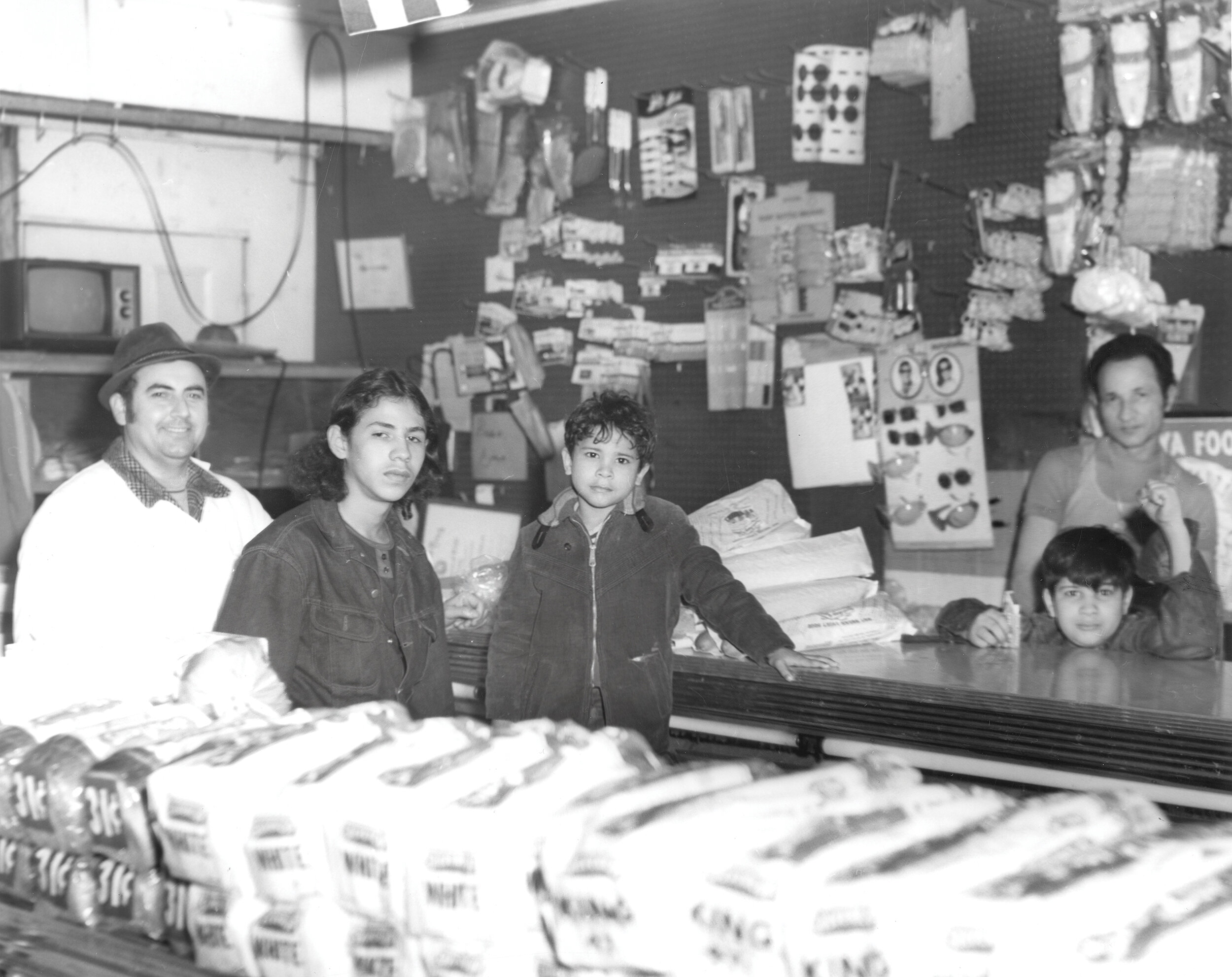
I want to be careful here. "Couldn't find" isn't the same as "didn't exist." I didn't search El Diario or La Prensa. The Spanish-language papers that actually covered Puerto Rican neighborhoods might tell a different story. The Justo Martí photographic collection at Hunter College has nearly 200 images of Puerto Rican-owned bodegas from 1948 to 1985, taken for liquor license applications. Cats might be sitting in the background of those frames right now, waiting for someone to look. But in the papers I could search, the ones that have been digitized and indexed, the bodega cat doesn't appear. I think that absence says something.
The cats that got coverage had something extra
Jerry Fox wore glasses. Custom fitted by an optician on Court Street after he went blind. That's a story.
The Post Office cats had a "Superintendent of Federal Cats" named George W. Cook who talked to reporters. They had a budget line item. They threw a banquet for 60 cats in 1904. The Brooklyn Navy Yard cats got a protection order from a Rear Admiral. Minnie could jump eight feet and take down rats bigger than herself, according to the New York Times.
These were institutional cats. They had titles, spokespeople, official recognition. Someone was keeping records.
Bodega cats worked without titles, spokespeople, or anyone keeping records about them.
This 1955 photograph by Angelo Rizzuto might be the closest thing to a mid-century bodega cat image in the public record. A cat sits on a stack of Beech-Nut Coffee boxes, under an awning, on a New York sidewalk. The public record gives us neither a name nor a story. The cat is there.
The category came later
The phrase "bodega cat" doesn't show up in newspaper archives before the 2000s. That doesn't mean people weren't saying it. Language lives in conversation before it lives in print. But as a recognized category, something you could name and point to as a distinct thing, it came together recently.
Before that, you'd just say "the cat at the store." You weren't describing a tradition. You were describing a cat.
What changed in 2007
A video went viral showing rats running through a Manhattan fast food restaurant. The health department started cracking down. Inspectors walked into bodegas and wrote $300 tickets for cats under Section 81.25 of the health code. The New York Times ran a feature on December 21, 2007: "To Dismay of Inspectors, Prowling Cats Keep Rodents on the Run at City Delis."
That was the first major English-language newspaper story specifically about bodega cats that I could find.
The cats were already familiar, but the conflict was new: the city was telling store owners to remove the animals they believed kept rodents away from food.
What the archive leaves out
The 2007 story didn't create bodega cat culture overnight. It took years of photo blogs, social media accounts, and people actually paying attention to corner stores before "bodega cat" became a phrase that meant something to people who'd never been to New York.
The long silence in the English-language archive leaves much of that history undocumented. Store owners kept and fed cats, but newspapers rarely recorded them as part of neighborhood life.
The gap does not prove that nothing was happening. It shows the limits of the records that were preserved and indexed.
Sources: New York Times archives, Brooklyn Daily Eagle, Peggy Gavan's "The Cat Men of Gotham" (Rutgers University Press, 2019), NYC Health Code Section 81.25. The Justo Martí Photographic Collection is held at the Center for Puerto Rican Studies Library & Archives, Hunter College. The Angelo Rizzuto photograph is available at the Library of Congress (LC-DIG-ppmsca-69922).
Related stories
Three public dates are on the calendar: Reddit’s r/bodega pop-up, a City Reliquary slideshow and talk, and Brooklyn Public Library on October 29.
See the official cover, finished interior spreads, trailer, and a look at how Bodega Cats of New York was made.
On June 25, 2026, I joined Untapped New York for a virtual talk about the BCNY archive, the book, and the current City Council bill.
Published March 7, 2025
Back to Stories